
Latest Book Reviews and Comments


I'm giving this book four stars because I really liked the short story in it. Also there were interesting interviews of Ms. Harris and Mr. Ball. I think the most interesting part in Ms. Harris's interview was that she revealed she has an agenda hidden in the Sookie books and after the short story I think I know what it is and I approve.

I recommend this to all those who are fans of the Robin Hobb's Farseer series. If you are not familiar with those, read them first. This is a nice little tale telling an important piece of history of the Six Duchies.

Conclusion of the Rain Wild Chronicles. I admit that at first this series felt bit of a let down. New characters that you didn't care about and were more interested of the cameos of the old favourites. But the characters grew on you. They started being important to you and found their own voice. That is what the Hobb books are about - becoming the person you were meant to become. Growth. Finding your own path, often in a hard way. And you started laughing and crying with them. I did both while reading this book.

Liked the story of Quinn and Blaylock, but didn't like the new characters. All the series must end at some point, but it looks like the next books are going to be about Xcor, Trez, Allair or whatever his name... Even if the mansion is big, you can't expect everyone to move in at some point!

Last book of the Darkness Rising -trilogy. Armstrong is one of my favourite authors and always nice to read. Visited Vancouver earlier this year and it was nice to know a bit about the places where things took place. Made me remember the visit :D These YA books take place in the same universe than her Women of the Otherworld -books, so recommended if you like those but don't usually read YA. Might run into some familiar names :)

Book five of the Kate Daniels -series. As the previous ones, this was fast and easy to read. Now that I try to remember what happened, it is surprisingly hard. Read it, enjoy while it lasts and then forget... I like most of the characters. I hope Rafael comes back in the next book ;)

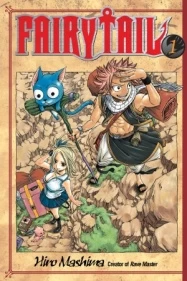
Fairy Tail is really interesting manga serie, from Hiro Mashima. Story is really catch up and first story was good start for this whole story of Fairy Tail guild.

It been a while, when I last time read a fantasy book in english, but this was really easy to read and also this story did catch my eye really fast.

Throne of Glass is... something else. Really good, cutting-edge YA high fantasy! And yes, we don't get that very often. I hear it's being marketed as the Young Adult version of Game of Thrones, which is true and is not true at the same time. Yes, there are many complex characters, all scheming with their own motives. Some you like, some you hate, but she scale of love and hate in Throne of Glass is nowhere near to that of George R.R. Martin's saga. Comparing those two novels in that fashion, I would have expected Throne of Glass to be much darker, gloomier and, well, gorier than it actually was. If you've read them both, I'd like to hear what you think about the comparison. What's clear, however, is that Throne of Glass is an excellent read - fast-paced, action-packed novel with a kick-ass heroine who's strong, smart and likable. We get two men, who in readers' hearts compete as the protagonist Celaena Sardothien's love interests. Sarah J. Maas did say, however, that in her mind there was never real competition and that the choice has always been clear to her. Well, thank you very much, Ms. Maas, but I rooted for that other guy. No spoilers. A thought. Princess Nehemia was a really cool character. She is independent, motivated, "nice like people are in real life, which means only as long as she likes to be". She's not one of those secondary characters whose acts seem to be created just so that the plot could advance. No, we get to find out why she makes her choices. And she just happens to be a person of color, without being a stereotypical person of color, or feeling like an added thing, just because there should be a person of color in a book. If you like thrill of competition, can stomach high fantasy world building (not everybody can) and won't be put out with a love triangle - please, read Throne of Glass. And don't forget the fantastic little prequels. Yum!

This book was better than next book. Next book was quite same than other but this was not so good than before but still good book. ;)
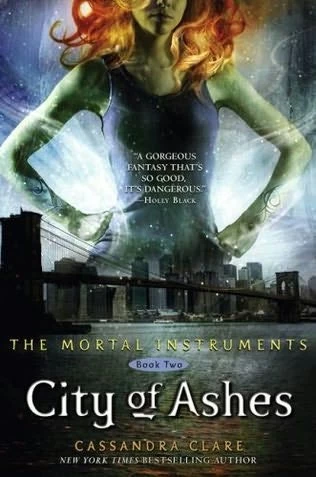
I love this book. It`s amazing. Okey Clary is often quite annoying but Jace, hi is so wonderful. You must read this.


I am not huge fan of Manga etc. genre, but I just love the art of Saiko Takaki in Vampire Hunter D, they seem to fit perfectly to the world that Kikuchi has created for his antihero D. It was D that first introduced me to the world of manga - and it is only D that still manages to raise my interest towards the genre...

I was kindly asked by the author to read "Evil Children of Naor" and provide an honest review. There are many good reviews the author has already received that accurately (and in great detail) describe what each of the three stories is about. Without repeating these themes, I'll focus on the author's strong points (which are many) and a few minor distractions. I thought the author wrote three very well written and entertaining books (short stories) that were very engaging. The author's writing style is very descriptive, especially when characterizing landscapes, customs/traditions, people, etc. You can tell that she put a lot of thought (and most likely research) into creating these civilizations. I could definitely envision in my mind where I was in each of the stories and really enjoyed that aspect of it. At the same time, I think a little more detail about some of the main characters (even some of the demons) would have been helpful to include. My impression of each book is included below: In Book One (Darkness of Soul) the author kept my interest peaked trying to figure out who exactly is Namaris. I did feel that the short story format took a little bit away from fully developing her and the supporting characters. I agree with many of the reviewers that probably all of her short stories could have been written as full novels if she had chosen to done so. Book One for me is an example of that because of the quality of characters and story lines introduced. For example, unless I am completely blind, I don't remember seeing any physical description of the main character (Namaris). I thought that was a bit distracting in light of the effort the author took in describing everything else. Even though I am male, and the main protagonist is female, when I read a book, I try to identify with the characters. Being able to envision what they look like to me (i.e. hair color, eye color, height, etc.), is important. Also, Eldreden plays a main role in the story and I instinctively wanted to know much more about him including his training and experiences as a Kemeid. Also I was interested in the instruments of magic mentioned, including the silver locket and the blades of Yenew. It would have been great to have more information about the race that made them and how humans acquired them. Regardless, despite the brevity of the story, the author excelled at keeping my interest, especially the fight scene with the Sirvion. In Book Two (The Blade of Hate), the story revolves around a knight named Tarion who is trying to figure out who killed a young girl in the woods and later is tasked with delivering a message from his Master to Ranidor Castle. I enjoyed reading the inner thoughts of Tarion trying to figure out who killed the girl as well as the interactions between Tarion and some of the supporting characters including Nandria, the Rat, and the Striga. I thought the author glanced over details about the Kemedi Order (as in the first book) and the tears of the goddess Mirge which contained great divine power. This was another story that I did not see any physical description of the protagonist. This may be intentional, but again, I found it a bit distracting not being able to envision what Tarion looked liked. Despite this, I thought the story was well thought out and did not turn out as one might expect. The author did a good job in this story in making the reader feel uncomfortable at times with the subject matter. For instance, when we learn about Manrus's feelings for a young woman, I found it quite disturbing and visceral. This is what I like about dark fantasy. In Book Three (The Silence of Kurgans), the story revolves around Jansemi who lives on the endless steppes of Elmor and her encounters with some disturbing things during her journey. The author again, leaves it totally to the reader to figure out what the protagonist looks like, which seems so contrary to everything else she describes in detail. As with all her stories, the author did a really good job describing the customs and way of life of the people (in this case, the Elmorians). I enjoyed reading about life at the winter camp (especially the importance of horses to the people) and the main hunt the camp undertook. There was a great cast of supporting characters (including Sahiat, Kalaha, and Tensarev), all of which I wanted to know more about. Of all the stories, this was my favorite because it was so dynamic, especially with all that took place in Sarmediria, including the battle that ensued with the demon and other powers. It was a classic good versus evil fight. Lastly, in my honest opinion, the cover design does not really serve the author's best interest from a marketing perspective. For me, because the woman on the cover is so voluptuous and scantily clad, yet ready for battle, I found it a little hard to take seriously. I wasn't offended by it in anyway; it just didn't evoke any realism to me. The artwork itself is very good. Nothing wrong with the artist. But the cover art to me caters strictly to a younger male audience, whereas the quality of the stories as a whole caters to everyone including young and old, and male and female (because the writing it very good). When I am shopping for a book to read on Amazon, I can't help but look at the cover art. I think that some older readers and maybe some women, might initially pass on what is otherwise a great collection of short stories, simply because of the cover. I probably would have passed reading it, if the author hadn't contacted me. Also, there are editorial issues that pop up sporadically throughout all three books, but I didn't find that it took away overall from enjoying the stories. Overall, I really enjoyed reading each of these stories and was impressed with the level of detail the author put into them. All three stories were very entertaining, well written, and too short in my opinion. But reading these made me want to read her first book, Dark Children of Naor, which is also a collection of three short stories. I would definitely recommend. Jeff Indieproofreader@gmail.com
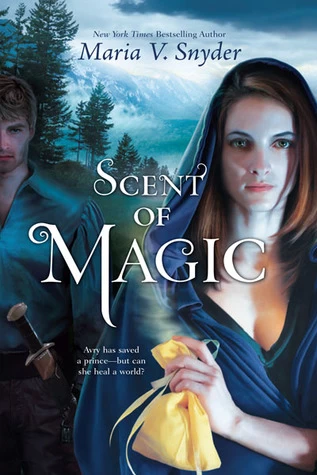
As a sequel to Touch of Magic, Scent of Magic was a real disapointing. It lacked the grip and paste the ToM had. Around middle of the book I had to take a pause and read couple of other novels before I could regain my focus to this. Character of Avry that I liked in ToM grew annoying the further the story got. Plus Snyder seems to have very unfortunate habbit in literature that has a war going on; she seems unable to kill any of the characters that matters to you. Not that I endure death, but the times these "dead" keep coming back in the series is getting ridiculous. Yeah, sure it would be great if you could get out of slahing/poisoning/stabbing -fight of the powerhungry with just a scratch on your knee, but everybody knows war just doesn't work that way. It's not realistic. Lacking the grip the book would have worked if it had been half shorter, but with it's 400 pages it get's occationally very dull to read. Shame really.
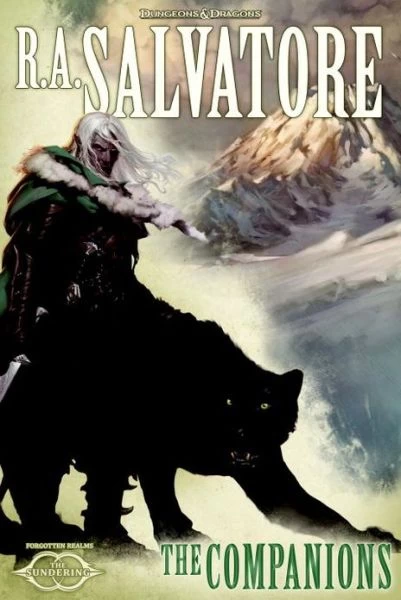
It's been a very long time since I last read a Drizzt Do'Urden novel, much less anything set in the Forgotten Realms, so I was excited about the opportunity to reacquaint myself with R.A. Salvatore's heroic dark elf and find out how his companions fared. Sadly, I should have either saved myself the trouble, or taken the time to investigate what The Sundering is all about. Basically, The Sundering is the story of giant reboot, designed to shoehorn existing characters and settings into a 'simplified' set of 5th edition rules, to be dubbed D&D Next. The Companions is the first book of that reboot. I don't like reboots. As the story begins, Drizzt's friends (all of whom are deceased), find themselves reincarnated, with all of their memories intact, and a shared purpose to meet again and resume their companionship. Um, yeah. Silliness aside, the resurrection of Wulfgar is probably the last thing I remember of Forgotten Realms, and that mistake is a large part of what caused me to drift away. So, to multiply that mistake with the likes of Regis, Cattie-brie, and Bruenor, is to ensure the series gets off to a rocky start. It felt like a Terry Goodkind-like attempt to artifically extend a series, except he does it by taking away powers and memories, whereas Salvatore does it by giving them back. As for Drizzt, he's more of a framing device and less of a character here, which is a shame because he's always been the most interesting of the lot. So, basically, what we get here are three heroes, trapped in the bodies of children, forced to pretend they don't know or remember things that should be impossible. It's an awkward kind of coming-of-age story, and while it does have its interesting moments, it all feels very scattered - which is not surprising when you're following multiple characters across two decades. There are some snippets of battle scenes, and some other adventures that evoked memories of earlier books like The Crystal Shard, but it somehow all feels artificial. What's more, there was no doubt, no tension, and no real suspense as to whether they would all make it to their eventual rendezvous . . . not to mention a climax that just falls flat. I could be wrong, and my reading may be colored by the end-goal of The Sundering, but it all felt like a story Salvatore was told he had to provide, not an adventure he wanted to write. It's not necessarily a bad book - die-hard readers of Forgotten Realms will likely enjoy it - but, for me, it lacked the magic and the mystery I remembered from my original adventures with Drizzt. Knowing what I know now about The Sundering, I doubt I'll continue with the series.

All things considered - and it definitely did have its flaws - Under a Graveyard Sky was probably one of the better apocalyptic tales I've read in a long time, and certainly one of the best zombie tales in recent memory. Rather weak and unbelievable in terms of characters, but very strong in terms of action and plot, John Ringo has pulled together a novel that is sure to please his fans, and potentially win him some new ones. The book starts on an awkward note, plunging us right into the action, without so much as an introduction to the characters involved. It was so disconcerting that I nearly abandoned it, but the way in which Ringo approached the situation intrigued me. He puts the fate of the world not in the hands of the military or the authorities, but in an investment bank and a well-connected family of 'preppers'. I'm sure there's a socio-political statement there for Ringo, and the bank's resources stretch the bounds of credibility somewhat, but it's an interesting approach that actually makes a lot of sense, once the shock factor wears off. It's that family which introduces the primary weakness, however, particularly thirteen-year-old Faith the Zombie Slayer. Seriously, you might as well call this girl the next chosen one, except she's all about the high-powered assault weapons instead of the stakes and crossbows. It's ludicrous how well prepared she is, and the ease with which she wades into danger and so gleefully delivers death to the infected is over-the-top and then some. There's actually a point where another character is shot down when he assumes her dad must have been a Buffy fan. She's a likable enough character, and could definitely work in a supernatural setting, this is a book that's deliberately grounded in realism - so much so that Ringo constantly reminds us that the zombies are dangerous, incurable, infected human beings . . . not the living dead. The zombies themselves are part of what I really liked about the book. There's no supernatural or mystical element here. The zombies are the product of a man-made virus, deliberately designed to be both air-borne and blood-borne for maximum dispersal. It turns its victims into raging, mindless, homicidal maniacs with a hunger for human flesh. There's no cure, and no halting its spread. Although the bank has managed to develop a vaccine by harvesting the spinal cords of living zombies, they are only good for about a dozen doses each. The first half of the book details the initial spread of the zombie outbreak, with life struggling to continue as normal for as long as possible. We see the police struggle to deal with a situation using tasers and batons, when deadly force is the only real option, while the government limits itself to identifying the source of the plague, rather than curing it. It's a slow descent into madness for civilization, with the first half of the book ending in a brutal bloodbath at a drug-fueled endless rave in Washington Square Park. It's so surreal that it seems plausible, and it makes for fantastic transition to the second, post-apocalyptic half of the novel. The second half of the book has a far slower pace, and really lacks the sense of urgency that comes from trying to escape impending doom, but it's where the story really develops. Faith and family set out to sea, where they search for other boats and ships to cleanse, rescue, and recover. As if battling zombies weren't tough enough, imagine doing so in the dark, claustrophobic depths of strange ships, adrift at sea. It makes for some great reading, and evolution of their makeshift civilian navy is really interesting to watch develop. Here's where the book is its most political, in discussing how to best organize and implement a new regime, with a lot of dialogue about historical precedent that comes close to being tedious, but is smartly resolved just in time. That brings us to the final flaw of the novel - basically that it just stops. There is a climactic set-piece to rival the rave in Washington Square Park, appropriately described by one of the characters as Resident Evil: The Cruise Ship, but it doesn't actually resolve anything. The reluctant arrival of the remnants of the US navy is a nice twist, particularly with them unable to do anything more than watch and advise, but all that really does is plant some seeds for the second book - nothing has been accomplished or resolved. There's no cliffhanger either (Ringo manages to avoid that source of reader wrath), but it does feel very much like an unfinished tale. All things considered, Under a Graveyard Sky was an enjoyable take on the zombie apocalypse. So long as the second book makes some attempt to deal with Faith's impending breakdown, delivers on the promise of multinational intrigue, resolves the 'lost' storyline of Steve's brother and the exodus of investment bankers, and doesn't jump the shark on the zombie infestation, we could be in for a good series.
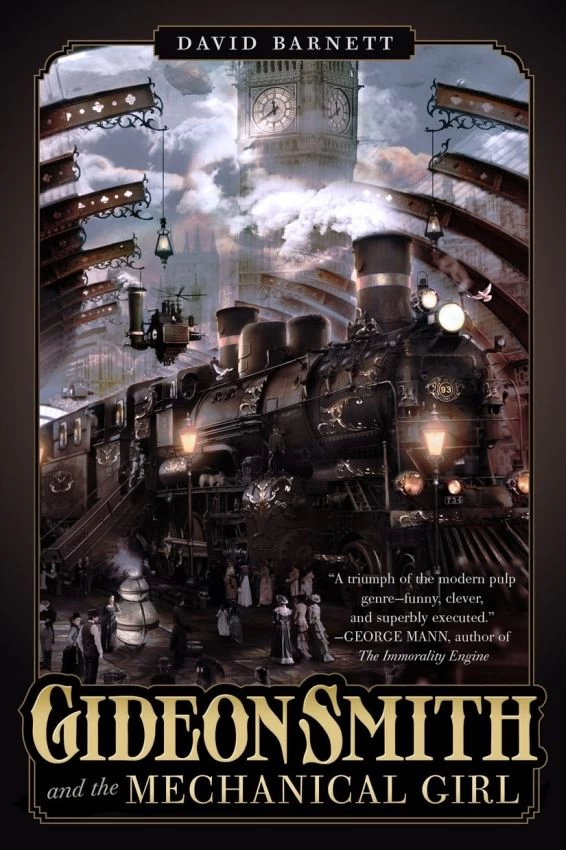
Next to perhaps River of Stars and The Marching Dead, both of which I went into with high expectations, I don't think I've enjoyed a book this year as much as I did Gideon Smith and the Mechanical Girl. From the concept to the characters, I enjoyed every aspect of it and came away wanting more . . . much more. David Barnett's novel has been called "the ultimate Victoriana / steampunk mash-up" but that doesn't begin to describe it. It's also an old-fashioned horror story, a penny dreadful romp around the world, and an adventure worthy of Indiana Jones. Barnett takes us from the streets of London to the sands of Egypt, and from the dizzying heights of battling dirigibles to the claustrophobic depths of ancient pyramids, all with vampires, mummies, devil dogs, and monstrous frogs along for the ride. More than anything, however, this is a tale of heroes. It's a story about heroes lost and found, made and unmade. It's a story about what makes a hero, why we worship them, and why the world needs them. It's also a story about how heroes can be found in the unlikeliest of places. Gideon Smith starts the novel as a shy young man in search of a hero to delve into the mystery hidden below the cliffs; a mystery that he is certain claimed the life of his father's crew. It's a search that brings him into contact with the likes of Bram Stoker and Elizabeth Bathory, as well as the mechanical girl who captures his heart. Ultimately, it's also a journey that brings him to the realization of his own innocent brand of heroism. As for the mechanical girl who makes up the other half of the title, Maria is a fascinating creation who doesn't get nearly the page time she deserves. She's a fully fledged character, as likable as she is sympathetic, but she's more of a catalyst than a character. It's a search for answers and a desire for vengeance that takes Gideon Smith through the first half of the novel, and a love for Maria that carries him through to the end. She does have a pivotal role to play in the story, both as a peril and a power in the climactic showdown. I won't spoil the adventure with details, but it's safe to say a mechanical girl pales in comparison to what rises from the depths of the pyramid at the end. In the end, there's not just room for a sequel here, but a cliffhanger that demands it. That's not to say Gideon Smith and the Mechanical Girl isn't a complete story on its own, because it is, but like the best of the penny dreadfuls it leaves us with us with the start of a whole other adventure. Exciting, adventurous, and exceptionally well-told, filled with equal parts amusement and astonishment, this is sure to be a fixture of best-of lists come the end of the year.
For a moment, forget the old adage about not judging a book by its cover. Take a look at the glorious cover to this collection of tales - look close and appreciate not just the detail that went into it, but the elements that are scattered throughout. Dark and fantastic, magical and horrific, it is one of those rare instances where the material inside delivers precisely upon expectations. Much like she did in her first collection, Dark Children of Naor, Justyna Plichta-Jendzio has created another work of classic/traditional fantasy here that weaves together fully realized characters and complex monsters - some of whom are one and the same - and some very dark fairy-tale like themes. With Evil Children of Naor we are once again presented with a trio of stories, linked both thematically and by their shared world. Here, the fight is against an evil within, which raises some interesting questions about who we are born to be and who we choose to become. The first story, featuring Namaris' fateful confrontation with the truth about her parentage, is the perfect choice to kick off the collection. It really sets the tone in terms of pacing and subject matter, and quite cleverly lulls the reader into a false sense of comfort before letting the clues begin to slip. Tarion's story is as different from the first as he is from the lovely Namaris, but it was probably my favourite of the three. While the each story had its strength, there was something about the flawed sort of heroism there that called to me. Jansemi's story brings us full circle, in a sense, with a story that echoes some of the themes of Namaris, but which is entirely it's own narrative. If you enjoyed your first trip to Naor, then you are certain to enjoy this return visit. If you are new to Justyna Plichta-Jendzio's world, however, fret not. Evil Children of Naor can most certainly be enjoyed as a standalone collection of tales, and loses nothing with being read first. You will notice I said 'first' . . . because you will want to back and read Dark Children of Naor as well.

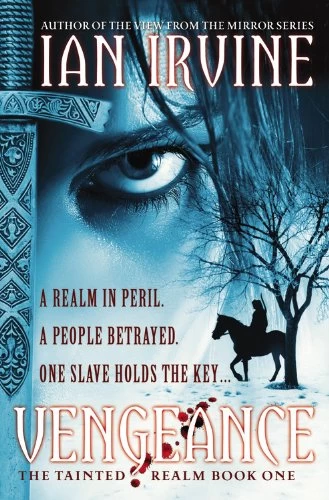
I had to reserve it when I saw it in the library first time. After borrowing it the book waited in the shelf for a good while before I finally managed to dwell into it. It was well worth it. Characters were well made and interesting, and their relationship as it unfolds was quite intriguing. I liked it a lot but it was not excellent. I would read the next books though to find out what happens to the main characters.

Happy Hour in Hell (Bobby Dollar book 2) Bobby Dollar returns and the afterlife just ain’t getting any easier for our hero! I’ve been a fan of Tad Williams’ work since I first picked up The Dragonbone Chair way back in the early 90’s but was sceptical when I heard what the subject matter of his new series was. Needless to say the blend of urban fantasy, noirish plotting and sense of humour soon won me over and I devoured The Dirty Streets of Heaven in around 2 days. Somehow I was lucky to receive any early copy of the second book and sat down to immerse myself in the continuing adventures of the angel Doloriel. Firstly let me say that Happy Hour in Hell is a relevant term as there is very little happiness for our leading character, starting with an elevator trip straight out of Angel Heart as he’s delivered to his starting point on the neronian bridge. Experiencing Hell from its lower depths to its despicable capital Bobby D has very little to smile about and proves that Dante gave us the PG13 version of what’s to come if we don’t all behave ourselves. Picking up where TDSoH left us Bobby is determined to get back his demonic girlfriend from her ex (who just happens to be a Grand Duke of Hell) and forms some unexpected alliances to get to Hell where his troubles really begin. Tad paints a pretty vivid picture of the underworld and its occupants, presenting us with the idea that Hell is a society that makes you work for everything that you need to survive (and by work I mean the daily 9-5 doesn’t end just because you died it just gets worse!) and that unlike Heaven it seems to be solidly based on a familiar capitalist framework. You need money to eat, you need shelter and you need water (of a type) to drink. There are cars, boats and machines but don’t expect any environmentally friendly Hybrids or a clean air act. Making friends and powerful enemies on his journey Bobby (in a snazzy new demon body) makes his way through several of Hells entries in this years Lonley Planet guide. The pacing of the book is excellent and even when there doesn’t seem to be a lot happening you get drawn along by Bobby’s constantly running interior monologue. Less Chandleresque than the first book HHiH still retains its noir style and Tad displays a dry sense of humour that I really enjoyed. Bobby is an Angelic hero by accident not choice and his witty come backs at times when he is on the receiving end of some pretty brutal torture reminds me of Robert Mitchum in those old B&W films I used to watch on Sunday afternoons. I have a couple of gripes but nothing major that will prevent me from counting down the days till the third instalment. After reading MS&T, Otherland etc I found the 400+ pages a little short but then worry that if it had been longer Tad would have spent that time filling pages with even more nightmarish images of Hellbound torture and suffering so maybe it’s a good thing. The sex, I’ve never read anything similar in Tad’s other books and it just doesn’t seem to sit right. I’m no prude but some of it just didn’t seem necessary (saying that Bobby’s encounter with the Lady Zinc will give most guys nightmares!). All in all a good follow up to TDSoH, second books can be notoriously difficult to pull off, but I think that Tad has done well here, the politics of Heaven & Hell make for an interesting storyline and just who is Kephas? One final point, Bobby, Bobby, Bobby. Scoolboy error pal, what’s the saying, “the Devil is in the detail!”.
Impressive Fantasy Stories Sprinkled with Rich Folk Lore. I absolutely enjoyed reading this well crafted collection of vivid fantasy tales. And, I would imagine all fans of this genre will love sinking their teeth into this one also! This captivating and commendable work had me immersed from the beginning. The overall work flows from scene to scene with ease, and the author shows excellent ability when it comes to storytelling. As much as this genre can be predictable, I found this flight of the imagination to be refreshingly imaginative. There are twists and turns in this page turner that will take the reader on a thrilling and magical journey. Also, the writing style is straightforward which makes for a rewarding read. This is a rare collection of stories that only come along once in a while which makes you want to read it non-stop until you get to the end. I’m giving nothing away here. And this, I hope, will only add to the mystery! A highly recommended read!

Like Justyna's Dark Children of Naor, Evil Children of Naor's cover will pull you into a world full of excitement...and terror. Don't skip the quick intro that follows the cover, it sets a dark tone for the tales to follow. This time out we learn about Namaris, Tarion, and Jansemi. Each of their stories takes place in the world of Naor. From what I've read, it seems like a pretty rough place - for both people and demons! My favorite here was the first story, featuring Namaris. There were multiple reveals, the final one quite exciting. You'd get your money's worth if you stopped here, but you won't want to miss what follows. Each story is wrapped up nicely, but don't always expect a traditional happy ending. Hopefully it won't be long before we can return to Naor for the next book in this series. HIGHLY RECOMMEND to fans of dark fantasy, both those who have read Dark Children of Naor and those who haven't...yet.
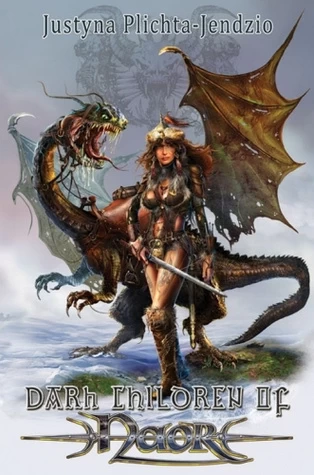
The author's debut contains three distinct tales of dark fantasy. The vivid descriptions make it easy to picture where the characters are and what is happening. I especially enjoyed the first story, "The Hunter." While establishing the setting, introducing us to Naor, the author also introduces us to Arnoku. He meets up with Lanes, a woman with a troubled past, and Ingard, an elf on a mission. Each is interesting, and I would enjoy further adventures featuring any of them. "The Hunter" has exciting fighting and a surprisingly emotional ending. If you enjoy fantasy, get this book. You'll find yourself transported to a dark, new world.

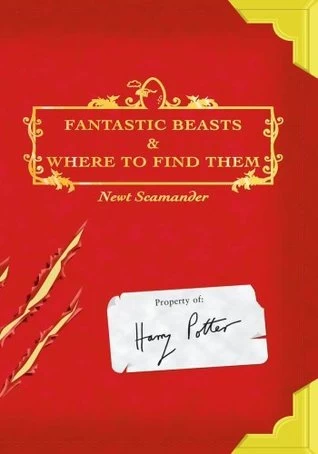
This was a delightful and quick read, adding a little more insight into the world of Harry Potter and the beasts within. The little scribblings in the margins from the characters were rather entertaining!

This was a delightful and quick read, adding a little more insight into the world of Harry Potter and the unique sport that Rowling made for the series.