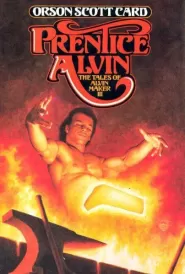
Prentice Alvin

Locus Award for Best Fantasy Novel 1990. Nebula Award nominee 1989, Hugo Award nominee 1990, Mythopoeic Fantasy Award nominee 1990.
Alvin's mortal enemy, the Unmaker, has found hearts and hands willing to do its bidding, while Alvin and the Prophet's people were making their last stand. Just across the Hio River from the town of Hatrack River was the first of the slave-holding territories – and they ran south all the way to the sea.
Both the United States and Appalachee have abolished slavery, while the Crown Colonies still deal in human flesh. But the slaves know that their hope of freedom lies just beyond the river; and the daring – or desperate – have often come within the range of Hatrack River's torch. Little Peggy is now sixteen, and has seen more of the world's evil than anybody rightly should – and when she "sees" a young girl and her infant son she isn't surprised by the cruelty the slave is running from. Peggy's father takes the risk of bringing the two back to the guest house, and in doing so creates the one path in all of Peggy's possible futures that may lead to happiness for both her and Alvin.
And so when Alvin arrives in Hatrack River to take up his apprenticeship with Makepeace Smith and learn to be a blacksmith, he finds that nothing is as he expected it to be. The would-be Maker is on his own, and the works of the Unmaker are close at hand.
Orson Scott Card's Tales of Alvin Maker have created a moving fantasy world from the dream of America and the simple magics of the people who settled her. Here is a world where folk magic is as much a part of life as hard work and religion, and where the red man and the white still have hope for living in peace with the land and each other. It is a fantasy unique to literature, yet as inevitable as breathing. It is a work that will live forever in your heart.

Orson Scott Card
Before Ender’s Game became required reading in classrooms and a touchstone for science fiction fans worldwide, it was just a short story—one that Orson Scott Card wrote while trying to understand how humanity might survive its own genius. That idea, born of curiosity and a deep interest in moral complexity, would eventually grow into a sprawling series exploring war, empathy, leadership, and the loneliness of brilliance.
Born in Richland, Washington in 1951 and raised mostly in Utah and California, Card grew up in a family where storytelling was a living thing—spoken, passed down, constantly evolving. Though he began his career writing plays and studying literature, he found his true voice in speculative fiction. And when he wrote Ender’s Game—and later Speaker for the Dead—he did something science fiction rarely dared at the time: he treated the genre as a tool for exploring the human soul.
The Tales of Alvin Maker
In an alternate early America where folk magic is as real as rivers and the future is written in visions, The Tales of Alvin Maker unfolds like a frontier myth whispered over firelight. It’s a world half-recognizable—filled with Puritan towns, wandering storytellers, and backwoods mystics—but charged with a sense of fate, wonder, and quiet danger that sets it apart from typical historical fantasy.
The Tales of Alvin Maker consists of seven books and considered as a complete series. The current recommended reading order for the series is provided below.