Treason
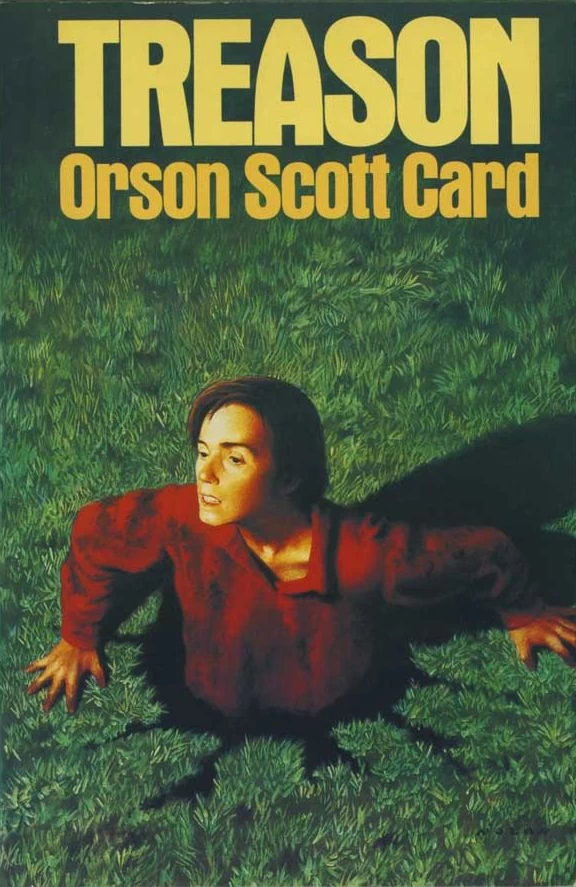
A revised and expanded version of A Planet Called Treason (1979).
Lanik Mueller's birthright as heir to planet Treason's most powerful rulership will never be realized. He is a "rad" – radical regenerative. A freak among people who can regenerate injured flesh... and trade extra body parts to the Offworld oppressors for iron. For, on a planet without hard metals – or the means of escape – iron is power in the race to build a spacecraft.
Iron is the promise of freedom – which may never be fulfilled as Lanik uncovers a treacherous conspiracy beyond his imagination.
Now charged with a mission of conquest – and exile – Lanik devises a bold and dangerous plan... a quest that may finally break the vicious chain of rivalry and bloodshed that enslaves the people of Treason as the Offworld never could.
Readers also enjoyed




Orson Scott Card
Before Ender’s Game became required reading in classrooms and a touchstone for science fiction fans worldwide, it was just a short story—one that Orson Scott Card wrote while trying to understand how humanity might survive its own genius. That idea, born of curiosity and a deep interest in moral complexity, would eventually grow into a sprawling series exploring war, empathy, leadership, and the loneliness of brilliance.
Born in Richland, Washington in 1951 and raised mostly in Utah and California, Card grew up in a family where storytelling was a living thing—spoken, passed down, constantly evolving. Though he began his career writing plays and studying literature, he found his true voice in speculative fiction. And when he wrote Ender’s Game—and later Speaker for the Dead—he did something science fiction rarely dared at the time: he treated the genre as a tool for exploring the human soul.
More books by Orson Scott Card